Best Camping Mattress for Side Sleepers You Should Know

Best camping mattress for side sleepers you should know. How to pick the Best Camping Mattress For Side Sleepers? You Should Know that it is best for you when there are so many companies creating such a broad selection of goods, each with its own attributes and types of products.
A good sleeping pad is essential if you sleep on your side, as the majority of people do. When I went on a three-month camping trip with a thin pad, I discovered this the hard way. My hips and lower back started hurting on day two, and they haven’t fully recovered two years later.
Get a good sleeping mat if you don’t want to wind up with so many bruises on your legs that they start to merge. Avoid making the same costly error I made by reading this post, which offers five excellent recommendations.
Our Top Picks:
- Best Overall: BETTER HABITAT SleepReady Portable Floor Mattress
- Runner-up: Sierra Designs 2 Person Queen Camping Air Bed Mattress
- Top Choice: Klymit Static V2 Inflatable Sleeping Pad
- Best Feature: WELLAX Sleeping Pad
- Best Rated: Sleepingo Sleeping Pad
5 Best Camping Mattress for Side Sleepers
1. BETTER HABITAT SleepReady Portable Floor Mattress

The SleepReady Portable Floor Mattress is an excellent choice for anyone needing a convenient, comfortable sleeping solution. Its 3″ CertiPUR-US memory foam provides reliable support, making it ideal for guests, camping trips, or car travel. The roll-out design keeps setup simple, while the waterproof cover adds long-term durability. Many users appreciate how compact it becomes when stored and how well it suits small spaces like dorms or kids’ rooms. With a 1-year warranty, it delivers impressive value and peace of mind.
Key Specs:
- 3″ CertiPUR-US certified memory foam
- Waterproof, removable cover
- Rolls out in seconds; easy storage
- Suitable for car camping and indoor/outdoor guest use
Pros:
- Excellent pressure relief for side sleepers due to thick foam
- No inflation required—zero noise and zero sinking
- Highly durable and easy to clean
- Great for car camping and multi-use convenience
Cons:
-
Bulkier than inflatable pads
2. Sierra Designs 2 Person Queen Camping Air Bed Mattress

The Sierra Designs Air Bed Mattress is built for couples or solo campers seeking reliable comfort. It inflates quickly with the included pump and offers solid support for overnight road trips, tent camping, or guest use. The mattress stays firm throughout the night, thanks to its durable construction and leak-resistant design. It’s available in both single and queen sizes, giving users flexibility for different trips. With strong customer ratings and thoughtful features, this mattress is a great blend of comfort, convenience, and affordability.
Key Specs:
- Available in Single and Queen
- Durable PVC construction
- Includes battery-powered pump
- Designed for car camping and travel
Pros:
- Plush, wide sleeping surface ideal for side sleepers
- Quick inflation/deflation with included pump
- Great value for couples or solo campers who prefer extra room
Cons:
-
Not the warmest option in cold conditions
3. Klymit Static V2 Inflatable Sleeping Pad
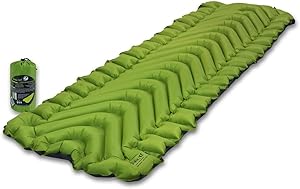
The KLYMIT Static V2 is a top pick for backpackers needing a lightweight, packable sleeping pad. Its V-shaped air chambers offer excellent body support, helping reduce pressure points on uneven terrain. At just over a pound, it fits easily into any pack and inflates in fewer breaths than many competitors. Users love its durability and ability to keep warm in cooler temperatures. If you’re looking for a dependable ultralight sleeping pad for hiking and multi-day adventures, the Static V2 delivers both comfort and value.
Key Specs:
- Ultralight at just 16.3 oz
- V-chamber design for support and airflow
- Packs down small for backpacking
- Inflates in 10–15 breaths
Pros:
- Surprisingly supportive for side sleepers despite a thin profile
- Lightweight and highly packable—ideal for backpackers
- V-shaped chambers reduce pressure points effectively
Cons:
-
Not as cushioned as foam or extra-thick pads
4. WELLAX Sleeping Pad

The WELLAX Sleeping Pad stands out with its self-inflating design and ultrathick foam that offers exceptional insulation. Whether camping in summer or cold weather, its all-weather build maintains consistent comfort and support. The built-in pillow adds convenience, eliminating extra gear to pack. While heavier than inflatable-only pads, it compensates with rugged durability and reliable sleep quality. Users seeking a long-lasting, warm, and easy-to-use camping mat will find the WELLAX a solid investment for both casual and frequent outdoor trips.
Key Specs:
- Self-inflating pad with thick foam core
- Built-in pillow
- All-weather insulation for 4-season use
- Durable TPU exterior
Pros:
- Excellent cushioning and insulation for side sleepers
- Built-in pillow adds comfort without packing extras
- Great warmth retention in cold climates
- Reliable durability for long-term use
Cons:
-
Larger packed size compared to ultralight inflatables
5. Sleepingo Sleeping Pad for Camping

This Ultralight Sleeping Mat is designed for hikers and backpackers who prioritize weight savings without sacrificing comfort. Its compact, foldable design fits effortlessly into small packs, making it perfect for long treks. The mattress inflates quickly and provides decent cushioning for rocky or uneven ground. Users appreciate its tear-resistant materials and strong air retention throughout the night. If you’re looking for an affordable, minimalist sleeping solution for outdoor adventures, this ultralight mat delivers great performance for its size and price.
Key Specs:
- Ultralight inflatable design
- Compact folding size for thru-hiking
- Air-cell structure for even weight distribution
- Quick inflation/deflation
Pros:
- Budget-friendly and extremely packable
- Air-cell pattern offers decent comfort for side sleepers
- Ideal for minimalist hikers and backpackers
Cons:
-
Not as supportive as premium foam or hybrid designs
What to look for
Camping equipment descriptions often read like a foreign language. I’ve simplified everything you need to know into one guide, so you can shop with confidence and avoid making any rookie errors.
Mattress Filling Material
You may acquire a foam pad, an inflatable pad, or a hybrid of the two for use as a sleeping pad. There are inflatable pads that inflate automatically and others that need air from your lips or a pump. In contrast to air mattresses, self-inflating pads often have a foam layer. Then there’s the good ol’ fashioned foam that’s completely airless.
Foam pads are my go-to for vehicle camping since they are puncture- and air-loss-proof. But when I go camping or hiking, I always bring an inflatable pad (the kind you inflate up manually, not self-inflating).
If you choose an inflatable mattress, be careful not to blow it up too much. You want it to be cosy, but filling it to the brim with air will put stress on the valves and cause them to wear out.
As a precaution against heat loss through the floor, I occasionally carry an insulated foam pad camping in the winter to use under my inflatable pad. If you invest in an R-value-worthy pad, you won’t have to worry about this.
Thickness
A thicker pad is preferable if you sleep on your side. Camping on a 3-inch mat is comfortable, but thru-hikers may prefer something thinner.
Side sleepers going on a camping trip may have to deal with a less pleasant night to reduce the weight of their pack and ease the strain on their back.
If you injure your back on the journey to your campsite, all the bedding you brought along won’t help!
Weight
The weight of the user and the sleeping pad itself are also factors to consider. There will be less cushioning around the user’s pressure points, and they will sink lower to the ground as their weight increases. To sleep on your side comfortably, the heavier you are, the thicker your pillow should be.
As long as it fits in the trunk, the weight of your sleeping pad is irrelevant while vehicle camping. However, finding the sweet spot between weight and thickness is essential for successful trekking.
Length
The length of each pad varies. Be careful to double-check the item’s measurements if you’re on the taller side before making a purchase.
If you’re short like me and want to save money and have a lighter bag, a child’s pad is a good option.
Material
Waterproof camping pads are more convenient in terms of cleanliness. It’s easy to soil your belongings when camping, but a quick rinse under the water at the conclusion of your trip can make quick work of any stains.
However, waterproof pads may not be as pleasant as those that are wrapped in a soft substance. The choice between cleanliness and ease of use is ultimately yours.
Insulation
The R-value of a material is a measure of its effectiveness as a thermal insulator. The greater the R-value of a sleeping pad, the more effectively it will insulate its user from the chill of the floor below.
A minimum R-Value of 4 is suggested for camping in cooler climates. The recommended R-value for use in icy climates is 6.
FAQs:
Q. How do you blow up a mattress topper?
It’s all about the pad, baby. You may just open the valve on a self-inflating pad and let it fill up with air on its own, but you might want to give it a little boost before shutting the valve. Depending on the design, you may be able to use your mouth, a foot pump, or even an airbag pump.
Q. How do you mend a hole in a sleeping pad?
You’ll need a puncture kit, which should include strong waterproof adhesive and patches, to repair a hole in your sleeping pad. A puncture kit may be included with certain sleeping mats.
Q. How much does a mattress pad typically run?
If you sleep on your side, you should budget at least $45 for a quality mattress. You can get cheaper pads, but you may need to use two if you want to sleep comfortably.
Q. Where can I get a sleeping mat with a higher R-Value?
The ground is a major source of heat loss, but you may mitigate this by placing a thin reflective pad beneath your main pad. If you need to bring two pads for warmth, you may as well have one that works better.
Related: